
Spirometry (Spirography)
Spirometry (Latin: spiro — I breathe out/blow, Greek: métrō — I measure) is a method for diagnosing External Respiration Function (ERF) that involves measuring lung volume and the speed of airflow during exhalation. Its alternative name is Spirography (Latin: spiro — I breathe out/blow + Greek: grapho — to write, to depict). It has different names because, historically, the results were recorded on paper, whereas today digital technologies are used.
It is applied in the diagnostics of respiratory and cardiovascular diseases, as well as breathing disorders resulting from other pathological conditions, including neurological diseases, developmental defects, and more.

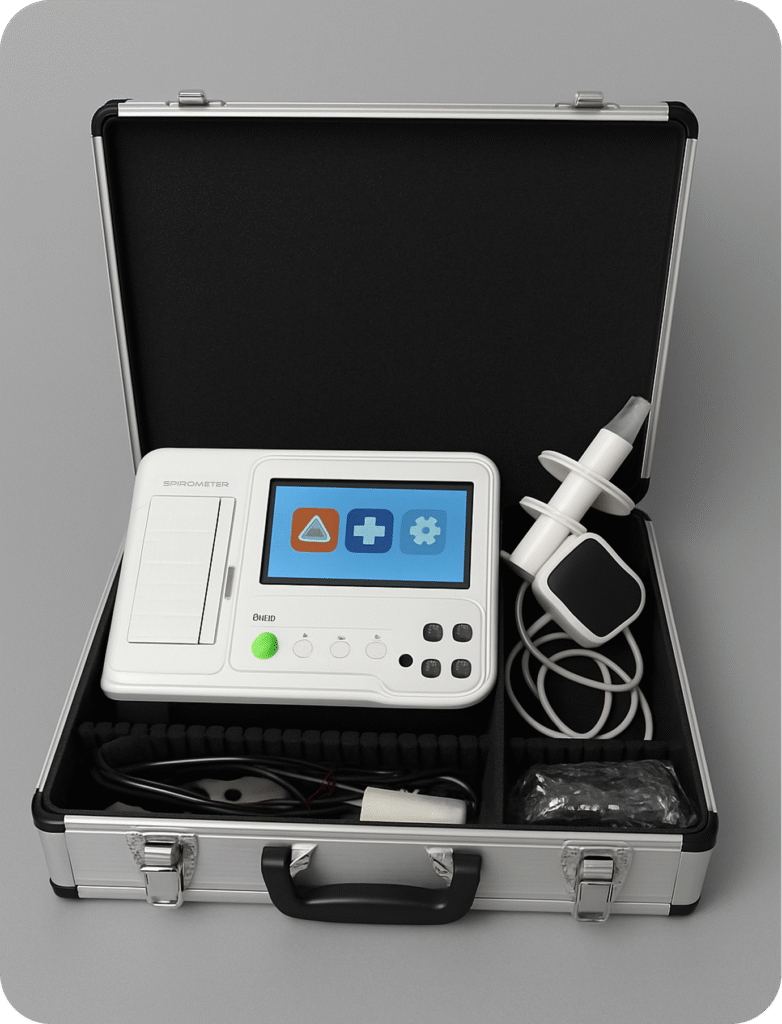
Spirometry is prescribed in the following cases:

pneumoconiosis;
pulmonary diseases (or chronic lung diseases)
сhronic cough;
frequent colds;
smoking (or history of smoking);
obesity;
vasomotor rhinitis;
occupational hazards;
assessment of bronchodilator efficacy;
before surgery (preoperative assessment);
for individuals over 70 years old;
evaluation of bronchial asthma;
dyspnea (shortness of breath);
feeling of air hunger;
asthma attacks;
myasthenia gravis;
rheumatic diseases;
skeletal pathology.

Indications for spirometry are divided into several groups:

diagnosis with suspicion of a respiratory disease (e.g., based on clinical symptoms or incorrect results from other auxiliary tests);
assessment of respiratory disease severity, progression, and response to therapy;
prognostic assessment in individuals with a diagnosed respiratory disease;
screening for individuals with an increased risk of respiratory diseases; perioperative risk assessment (evaluating risk before planned surgery&